










The Death of Alternative Berlin?
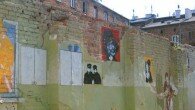
If there is one place in Berlin that teaches us not to judge a book by its cover, it’s the Tacheles. At first glance, it looks like a mess. The early 20th-century department store is falling apart, covered in old bullet holes and graffiti. The smell of urine hits hard in the stairwells, and at the bottom sits a gargantuan mess of empty beer bottles, food wrappers and old fliers.

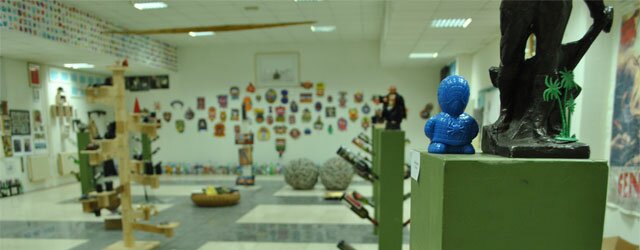
This building definitely doesn’t have a cleaning staff and hasn’t gotten a makeover in a long time, in contrast with the tourist-friendly, clean-cut image of Mitte, the central district of Berlin. Surprisingly, this former squat is one of the best places in Berlin to see contemporary art in progress.
Just a few minutes down the road is Schokoladen, another former art squat and self-proclaimed culture café. While the Tacheles provides space for visual artists, Schokoladen is mostly for musicians. By night, it’s a meeting place for people into alternative music, and a haven for little-known bands.
Of course, the main attraction is the ground-floor stage and bar where concerts are held, but the former chocolate factory also houses the Club der polnischen Versager (club of Polish losers), an organization promoting Polish artists and culture. There are also rehearsal rooms and studios. It even has a theatre group called TISCH – Theater im Schokohof working in its backyard. Unfortunately, both of these buildings, as well as other former squats in the area, are in constant danger of shutting down.
However, Linda Cerna, spokesperson for the administration of the Tacheles, isn’t too worried. “They planned to build a luxurious quarter around here and as you see when you look out the window, nothing happened in the last ten years,” she says. However, the 19-year-old former art squat is now stuck in a legal battle for survival with its owner, the company FUNDUS Group, and the situation is leaving everyone a bit confused.
“There’s the creditor bank, there’s still the investor who is the owner, and so it’s hard to find out who to talk to,” says Cerna. “More or less, we have the feeling that no one wants to talk, just wait.” The FUNDUS Group could not be reached for comment. However, their website claims that “the Group’s intention is to invest in the preservation of the well known artists’ house ‘Tacheles’…as well as in the erection of residential and commercial buildings.” However, Cerna says that they’ve had no direct contact with the Group since 2007.

No one has lived in the Tacheles for years, but it still retains a certain lived-in atmosphere. At 19, the Tacheles is one of the oldest squats in Berlin, and has been saved from demolition many times in its long history. Most people involved are hoping that the Tacheles will come through victorious because of this. “There’s always a way. It was almost shut down so many times,” says artist Paolo Mundo, who makes and sells his art in the stairwell every day.
Cerna states that saving the Tacheles would be within the city’s interests. “All the people who have stores or restaurants around here really wish that we stay because we bring people to their places.” The Tacheles attracts over 300,000 visitors every year. The government also recognizes that keeping the Tacheles would benefit both the artists and the commercial area surrounding them. An official document from Ephraim Gothe, Mitte’s minister of Urban Development, states “while the cultural establishment with its high visitor numbers will be positive for the attraction of the whole area, it can also benefit from the planned surrounding facilities.”
In fact, the document on development plans for the area indicates the government wants to legally set its status as a cultural building. “ The cultural house “Tacheles” shall be integrated into the general concept of developing the area around it,” it says, continuing to say that the house and the area around it are to be for cultural purposes only. The overall plan is to integrate the Tacheles into “mixed vital quarter” with a 30% living area to make sure that it survives for a long time.
However, Cerna states that more support is needed from the government. “They just support us with words, more or less, and there’s hardly a chance to get money from the city,” she says. “We hope they say, ‘just give it to them,’” she says, wishing the government would finally step in to make the Tacheles a permanent cultural institution.

On the other end of downtown Mitte, Schokoladen is also celebrating its 19th birthday and hoping to stay a permanent institution. According to Melissa Perales, who lived in Schokoladen and still runs a weekly cultural program, it is also facing problems with its owner, Markus Friedrich, who has wanted to kick the artists out for years. “They bought this place thinking it’s in the middle of Mitte, it’s going to make us a goldmine and instead they got us,” She says, laughing.
Perales says Friedrich tried and failed to force everyone out when the property was purchased. “If he wanted to progress he would have to take every single individual with a contract to court,” she says. “And basically, the precedent was set from this one case that we would win.”
The artists living in Schokoladen were given a contract a few years ago by the government, making eviction even more difficult. Perales states the contract is low, only 1 or 2 Euros per square meter compared to the usual average of 10 Euros per square meter in Mitte.
The former art squat was involved in negotiations to buy the house from the owner, but recently Friedrich has attempted to evict the artists again. Perales isn’t surprised. “He tells the media that he wants to sell the house and he wants to work with us, which is completely a fabrication, “ she says. “But since he’s told that to the press we’re trying to hold him to it.” Friedrich could not be reached for comment.

Even though there might be hope for both Schokoladen and Tacheles, almost everyone realizes that all good things must come to an end. “It’s not as easy today…you couldn’t set up a squat anymore,” says Perales. According to her, the city has changed a lot since the heydays of squatting in the 1990s. She says that when people start cultural projects, they now expect them to be temporary. “It’s different than when we started off…but we don’t want to be a temporary space.”
Tacheles spokesperson Linda Cerna has also noticed changes around her contemporary art haven. “For us, it’s not such a big problem. It’s a neighborhood and we can deal with luxurious restaurants or all the galleries around here,” she says, adding “it’s just not the way we choose and we will try to do everything so that we will not be a luxurious art hotel one day.”
The administration is currently contacting various cultural institutions and educational facilities interested in art and subculture that might want to buy the house back for the artists. Cerna says the Tacheles is already involved in negotiations with individuals and foundations, but it’s too early to tell if anyone will invest that kind of money.
However, finding a buyer in the middle of an economic crisis is proving to be difficult. On the other hand, Cerna says the crisis has its benefits. “It would be different if many investors with a lot of money would have interest in this property here,” she says. “Probably it would be more difficult for us to stay.” Ultimately, Cerna says the solution to the problem has to be political. “If culture and art are public things, public money should help to finance it,” she states.

So what can save Berlin’s alternative scene, since the government isn’t intervening yet? According to Melissa Perales, it all comes down to the citizens not letting anyone get away with it. “I think gentrification you cannot stop anywhere, but it’s just a matter of how much the government allows and how much the citizens allow,” she says.
Already, citizens are playing their part in saving the Tacheles. Over the last few years, the building has collected over 40,000 signatures from visitors and residents. However, artist Paolo Mundo still thinks more should be done. “People can take your time and then just walk away…people just don’t participate,” he says.
It’s a tumultuous time for counterculture in Berlin. The mainstream is creeping up on it, leaving it surrounded by fancy restaurants and five-star hotels. Many residents of Berlin even consider the Tacheles an idealized, “Disney” squat. The ultimate question remains: can alternative Berlin survive this tide of change?

There is a ray of hope, even if the near future seems cloudy for alternative art in Mitte. Even though counterculture might be shutting down in the district, there are always going to be places where artists congregate, even if those places might not have the same impact as being in Mitte. Although Linda Cerna says the Tacheles won’t relocate if evicted, it doesn’t mean the end of contemporary art as Berlin knows it. There are squats and contemporary art galleries gaining attention in the districts of Kreuzberg and Friedrichshain. Perhaps alternative culture isn’t quite dead yet; it’s just moving to the fringes.
The Class of 2010
Nice writing. You are on my RSS reader now so I can read more from you down the road.
Allen Taylor